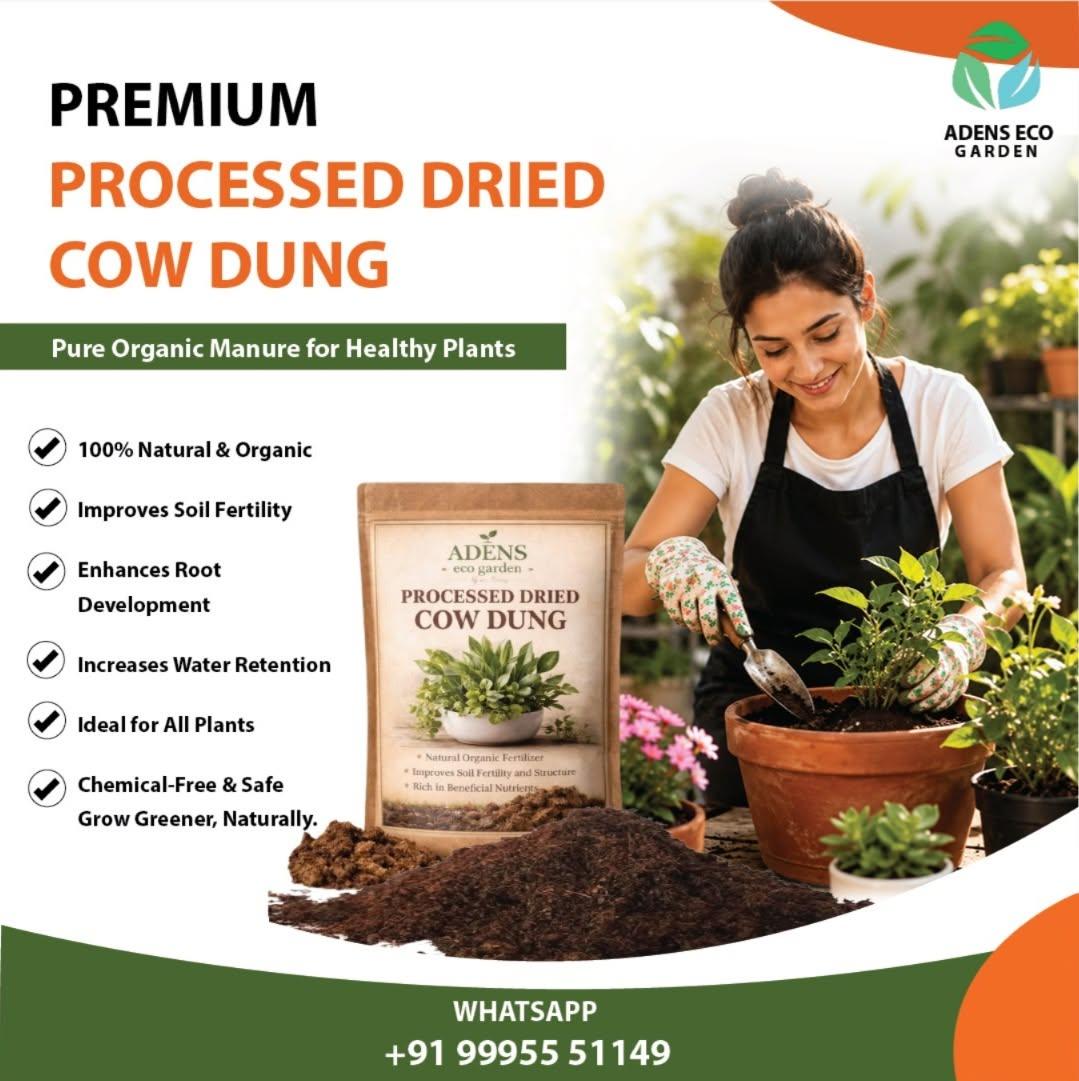

Cow dung is one of the oldest and most valuable organic resources used in agriculture. Rich in essential nutrients and beneficial microorganisms, it naturally improves soil fertility, enhances crop growth, and supports sustainable farming practices. It contains nitrogen (N), phosphorus (P), potassium (K), and organic matter that enrich the soil, improve its structure, and increase its water-holding capacity.
Widely used by organic farmers, cow dung promotes healthy root development and encourages the growth of beneficial microbes that improve nutrient availability. It also helps maintain soil moisture, reduces soil erosion, and enhances long-term soil productivity. Unlike synthetic fertilizers, cow dung releases nutrients gradually, ensuring a steady supply of nourishment to plants without causing environmental harm.
Cow dung is commonly used in the preparation of farmyard manure (FYM), compost, vermicompost, and organic liquid fertilizers such as Jeevamrutham and Panchagavya. It is suitable for vegetables, fruits, cereals, pulses, spices, flowers, medicinal plants, and plantation crops. Regular application improves soil health, increases earthworm activity, and supports higher crop yields over time.
In addition to its agricultural benefits, cow dung is an important raw material for biogas production, providing a renewable source of clean energy. The slurry left after biogas production is an excellent organic manure with enhanced nutrient availability. Dried cow dung cakes are also traditionally used as an eco-friendly fuel in many rural areas.
Cow dung remains an essential input for sustainable agriculture, helping farmers reduce dependence on chemical fertilizers while improving soil health and producing healthier, more productive crops naturally.
Guaranteed safe & secure checkout

Welcome to Adens Eco Garden, a serene destination where nature, sustainability, and relaxation come together. Nestled amidst lush greenery, Adens Eco Garden offers a refreshing escape from the busy pace of everyday life, providing visitors with a chance to reconnect with the beauty of the natural world.
Our eco...